Transcendence Casino
Real-time multiplayer online casino
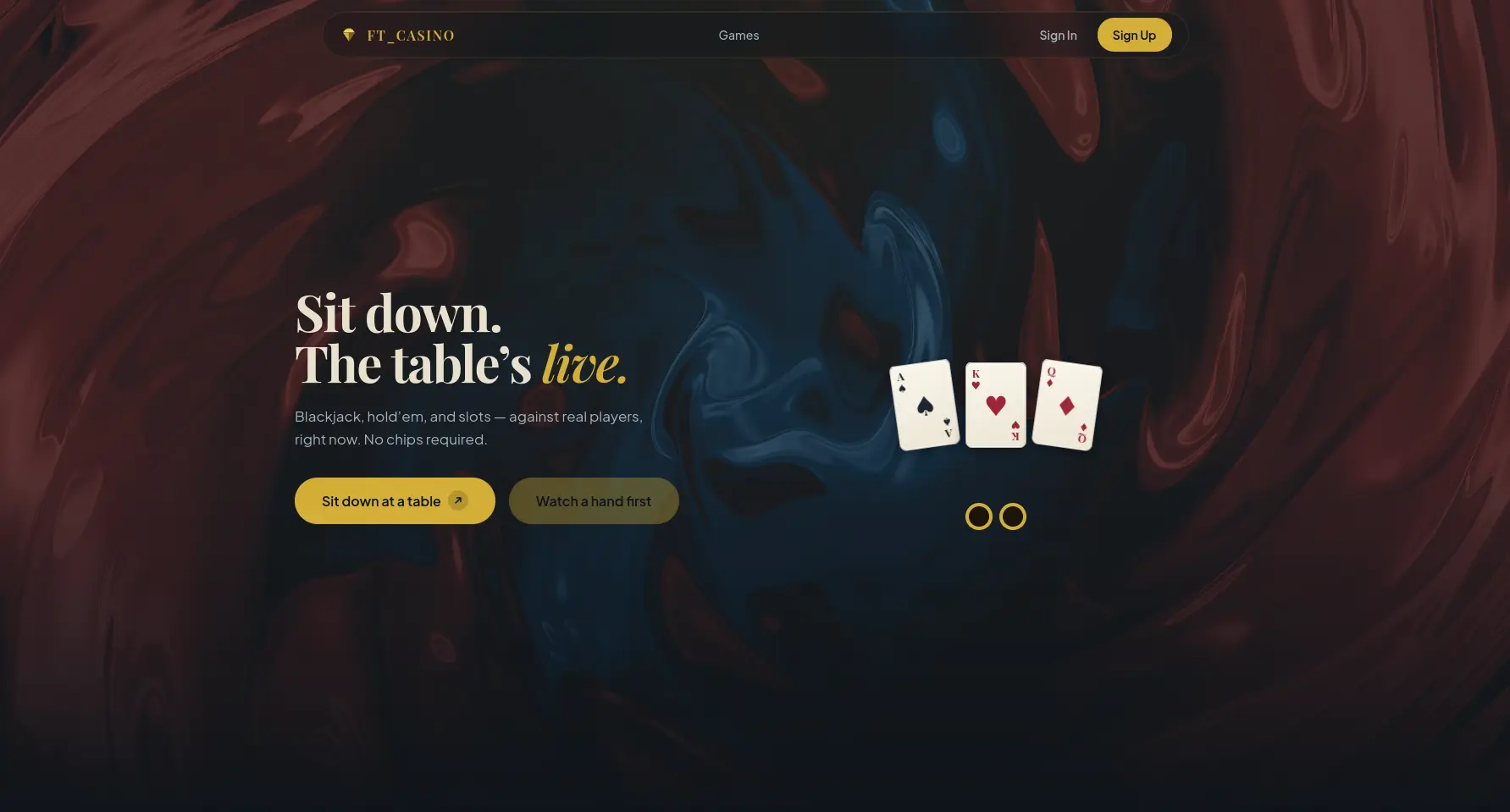
A real-time multiplayer casino — Blackjack, Poker, and slots — spanning Go, C++, and React, bridged by gRPC and a hand-rolled WebSocket hub, with a full Prometheus/Grafana monitoring stack.
- Games live
- 3
- Architecture, over gRPC
- 3-tier
- Grafana dashboards
- 6
Read the case study
Problem: Transcendence is 42's capstone project format — a large, module-scored web application with strict architectural requirements: a typed backend, a real database, containerized services, real-time multiplayer gameplay, security, and production-grade monitoring. The brief here was a full online casino — Blackjack, Texas Hold'em Poker, and a slot machine — playable live over WebSockets, not a static demo.
Solution: The result is a three-tier system: a Go and Gin backend handling auth, wallets, and REST/WebSocket traffic; a standalone C++ engine handling the actual game rules — card shuffling, hand evaluation, poker betting rounds, slot RNG — over a gRPC contract; and a React/TypeScript frontend on top, themed as a from-scratch "luxury casino" design system rather than a reskinned component kit, with cross-browser support and a spectator mode so a live hand can be watched by other users in real time.
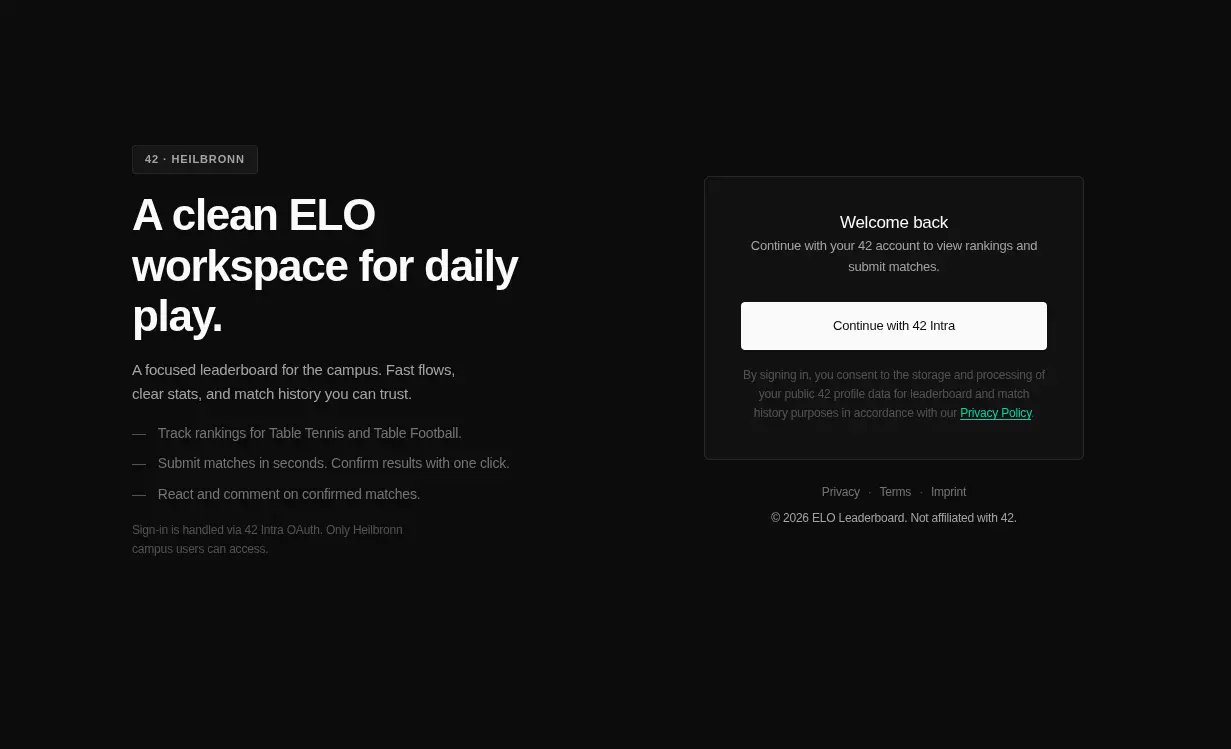
Technical Approach: Two details push this past a CRUD app with a casino skin. Every balance-changing operation — a bet, a deposit, a payout — runs inside a locked database transaction using exact decimal arithmetic, since float math is unacceptable for money; the transactions table is an append-only, independently auditable ledger. And the real-time layer is a hand-rolled WebSocket hub, not a pub/sub library — it tracks per-user, per-tab, per-topic subscriptions and debounces presence so a page refresh doesn't flicker a player's status offline. Similar cross-language, protocol-level thinking shows up in the ELO Leaderboard's concurrent match processing.
Results & Learnings: The stack also carries a full observability layer — Prometheus scraping six targets and six auto-provisioned Grafana dashboards, with alerting routed to Discord. OAuth2, 2FA, and a custom music module are still in progress. Working across three languages bridged by a single protobuf contract made the tradeoffs of IPC design concrete in a way a single-language stack never does.
- Stack
- Go, C++, TypeScript, React, PostgreSQL
- Focus
- Real-time multiplayer, financial correctness